Yes, fiberglass pools are often better than concrete pools for most homeowners because they are easier to maintain, install faster, and cost less over time. However, concrete pools still have advantages when it comes to customization and design flexibility. The “better” option depends on your budget, design goals, and how much maintenance you are willing to handle.
Fiberglass vs Concrete Pools: Quick Comparison
| Feature | Fiberglass Pools | Concrete Pools |
|---|---|---|
| Installation Time | Very fast (1–3 weeks) | Slow (2–6 months) |
| Maintenance | Low maintenance | High maintenance |
| Durability | Flexible, crack-resistant | Strong but prone to cracking |
| Cost (Initial) | Moderate | Expensive |
| Cost (Long-Term) | Lower | Higher |
| Customization | Limited shapes and sizes | Fully customizable |
| Surface Feel | Smooth and non-abrasive | Rough surface |
| Algae Growth | Minimal (non-porous) | More likely (porous surface) |
Understanding Fiberglass Pools
Fiberglass pools are pre-manufactured shells made from layers of fiberglass and resin. They are delivered to your home in one piece and installed into a prepared hole in your backyard.
Key Benefits of Fiberglass Pools
1. Quick Installation
One of the biggest advantages of fiberglass pools is their fast installation time. Since they are pre-built, the installation process usually takes just a few weeks. This is ideal for homeowners who want to enjoy their pool quickly.
2. Low Maintenance
Fiberglass pools have a smooth, non-porous surface. This means algae and bacteria cannot easily grow on them. As a result, you will spend less time cleaning and use fewer chemicals for water treatment.
3. Durable and Flexible
Fiberglass has a natural flexibility, which allows it to withstand ground movement. This reduces the chances of cracks, which are more common in concrete pools.
4. Cost-Effective Over Time
While the upfront cost may be moderate, fiberglass pools are cheaper in the long run because of lower maintenance, fewer repairs, and reduced chemical usage.
Understanding Concrete Pools
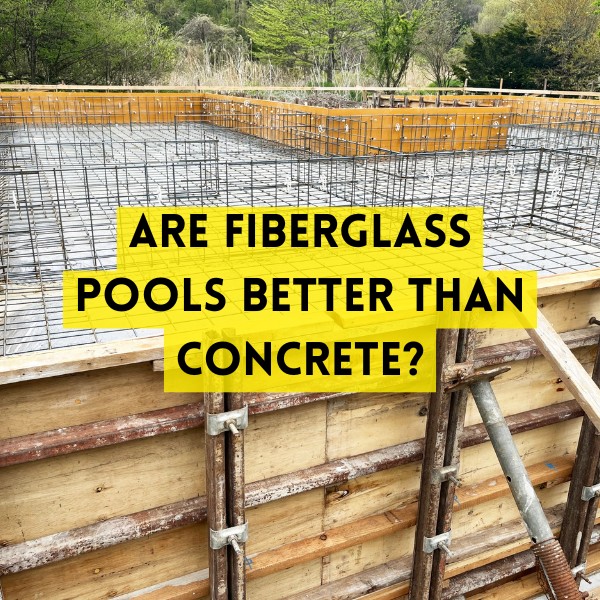
Concrete pools, also called gunite or shotcrete pools, are built on-site using a steel-reinforced framework and sprayed concrete.
Key Benefits of Concrete Pools
1. Unlimited Customization
Concrete pools are fully customizable in terms of shape, size, and design. Whether you want a unique shape, deep end, waterfall, or custom lighting, concrete pools allow complete freedom.
2. Premium Design
Concrete pools are often considered more luxurious because they can be designed to match your exact vision. They are popular for high-end backyard designs.
3. Long Lifespan
With proper maintenance, concrete pools can last for decades. However, they require resurfacing every 10 to 15 years.
Fiberglass vs Concrete: Detailed Comparison
1. Installation Process
Fiberglass pools are much faster to install because they arrive as a complete structure. Installation typically takes 1 to 3 weeks.
Concrete pools require multiple steps including excavation, steel framing, plumbing, spraying concrete, curing, and finishing. This process can take 2 to 6 months depending on weather and complexity.
If you want a quick backyard transformation, fiberglass is the better choice.
2. Maintenance Requirements
Fiberglass pools are easier to maintain because their smooth surface prevents algae buildup. You will spend less time scrubbing and balancing chemicals.
Concrete pools are porous, which allows algae to grow inside the surface. This requires more frequent cleaning and chemical treatments.
Fiberglass is better for low-maintenance living.
3. Durability and Strength
Concrete pools are strong but can crack over time due to ground movement or temperature changes.
Fiberglass pools are flexible and can withstand shifting ground better without cracking.
Fiberglass has an advantage in flexibility and crack resistance.
4. Customization Options
Concrete pools offer unlimited customization. You can create any shape, size, or design you want.
Fiberglass pools come in pre-designed shapes and sizes. While modern designs are stylish, customization is limited.
Concrete is best for fully custom designs.
5. Cost Comparison
Fiberglass pools have lower installation costs and lower long-term maintenance costs.
Concrete pools have higher installation costs and higher long-term maintenance due to resurfacing and chemical usage.
Fiberglass is generally more cost-efficient overall.
6. Surface Comfort
Fiberglass pools have a smooth surface that is gentle on feet and skin.
Concrete pools can feel rough and may cause scrapes if the surface is not properly finished.
Fiberglass offers a more comfortable swimming experience.
7. Longevity and Repairs
Fiberglass pools can last for decades with minimal repairs and rarely need resurfacing.
Concrete pools require resurfacing every 10 to 15 years to maintain appearance and structural integrity.
Fiberglass requires less long-term repair work.
Which Pool Is Better for You?
Choosing between fiberglass and concrete depends on your priorities.
Choose Fiberglass Pools If:
- You want fast installation
- You prefer low maintenance
- You want lower long-term costs
- You want a durable and crack-resistant pool
- You prefer a smooth swimming surface
Choose Concrete Pools If:
- You want a fully customized design
- You are building a luxury or unique pool
- Budget is not a major concern
- You want specific shapes or large pool sizes
Final Verdict: Are Fiberglass Pools Better Than Concrete?
For most homeowners, fiberglass pools are the better option due to their ease of maintenance, lower long-term cost, and faster installation.
However, if customization and design flexibility are your top priorities, concrete pools remain the superior choice.
Why Choose Harbor Pool?
If you are located in Suffolk or Nassau County, working with a professional contractor like Harbor Pool ensures your pool is installed correctly, efficiently, and with expert craftsmanship. Whether you choose fiberglass or concrete, an experienced pool contractor can help you design and build your ideal backyard oasis.