Owning a pool comes with many benefits such as fun, relaxation, and a private oasis at home. However, it also comes with responsibilities including maintaining cleanliness, ensuring safety, and prolonging the life of the pool. One of the best investments for convenience, safety, and efficiency is an automatic pool cover.
An automatic pool cover keeps debris and leaves out of the pool, prevents accidents, reduces chemical usage, and helps maintain water temperature. Like any mechanical system, it requires maintenance. Knowing the parts of an automatic pool cover is essential for repairs, replacements, and troubleshooting. This guide will break down all the main components of an automatic pool cover, their functions, and why they matter.
1. Main Cover Components
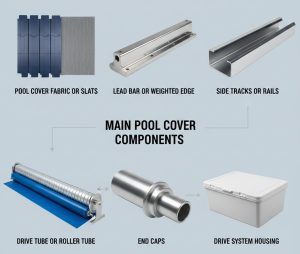
The main cover components interact directly with the water surface and the pool structure. These parts are critical for the cover to function properly.
Pool Cover Fabric or Slats
The fabric or slats form the actual barrier over the pool. Depending on your system, this can be vinyl mesh, solid fabric, or polycarbonate slats. Vinyl and mesh covers are durable and prevent debris and leaves from entering the pool. Polycarbonate slats are rigid, interlocking, and provide additional safety and weight.
Lead Bar or Weighted Edge
A lead bar runs along the edge of the pool cover. Its primary purpose is to keep the cover tight and taut, ensure smooth operation along the pool rails, and add extra weight for safety, especially in slatted covers.
Side Tracks or Rails
Side tracks are installed along the edges of the pool and act as guides for the cover. Proper alignment prevents jamming and ensures smooth operation.
Drive Tube or Roller Tube
The drive tube or roller tube is the core component that rolls the cover in and out. In retractable systems, the pool cover wraps around this tube when the pool is open.
End Caps
End caps protect the exposed ends of the roller tube from corrosion and water damage while ensuring smooth rotation.
Drive System Housing
The drive system housing contains and protects the drive mechanism from water, dirt, and debris.
2. Mechanical and Drive Components
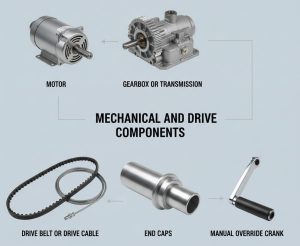
Mechanical components are responsible for moving the cover safely and efficiently.
Motor
The motor powers the automatic cover. Most modern systems use electric motors designed for low maintenance and quiet operation.
Gearbox or Transmission
The gearbox reduces motor speed and increases torque, allowing the cover to move smoothly without straining the motor.
Drive Belt or Drive Cable
Belts or cables transfer power from the motor to the roller tube. Over time, these may need adjustment or replacement due to wear.
Manual Override Crank
Some systems include a manual crank as a backup. This allows you to operate the cover manually during power outages or motor failure.
3. Control System Components
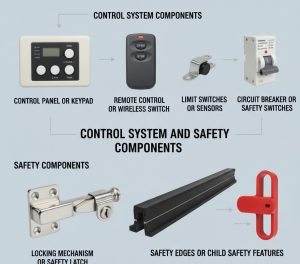
Automatic covers often include sophisticated control systems for convenience and safety.
Control Panel or Keypad
The control panel is where you operate the cover. Many systems include timers and programmable settings.
Remote Control or Wireless Switch
A wireless remote allows you to open or close the pool cover from poolside.
Limit Switches or Sensors
These sensors prevent the motor from running beyond the fully open or closed position, protecting both the cover and motor.
Circuit Breaker or Electrical Safety Switches
Circuit breakers protect the motor from overload and potential electrical hazards.
4. Safety Components
Safety is one of the primary benefits of an automatic pool cover.
Locking Mechanism or Safety Latch
The locking mechanism prevents accidental opening and ensures the cover stays secure when not in use.
Safety Edges or Child Safety Features
Optional safety features may include child safety locks or edges that prevent entrapment. These features are recommended for households with children.
5. Optional Accessories
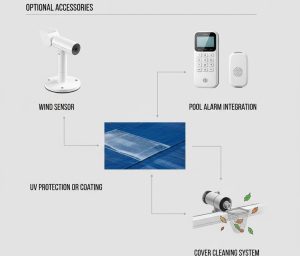
Automatic pool covers can include additional features for convenience, protection, and longevity.
Wind Sensor
A wind sensor stops cover operation during strong winds to prevent damage.
Pool Alarm Integration
Some systems integrate with pool alarms for extra safety.
UV Protection or Coating
UV protection prevents sun damage and extends the life of the cover material.
Cover Cleaning System
Some systems include mechanisms to remove leaves and debris automatically as the cover operates.
6. Maintenance Tips for Automatic Pool Covers
Understanding the parts is just the first step. Proper maintenance keeps your pool cover functional for years.
Regular Inspection
Check the fabric, slats, and rollers for signs of wear or damage.
Lubricate Moving Parts
Keep the gearbox, belts, and roller tube lubricated to ensure smooth operation.
Clean Tracks
Dirt and debris in the side tracks can prevent the cover from moving smoothly.
Test Control Systems
Regularly test the motor, limit switches, and remote controls to ensure proper operation.
Protect from UV Damage
Consider a UV-protective cover or coating to extend the life of the pool cover.
7. Automatic Pool Cover Parts Table
| Part | Function | Maintenance Tips | Replacement Advice |
|---|---|---|---|
| Pool Cover Fabric / Slats | Covers the pool and prevents debris from entering | Inspect for tears, clean regularly | Replace if damaged or heavily worn |
| Lead Bar / Weighted Edge | Keeps cover tight and stable | Check for corrosion | Replace if bent or damaged |
| Side Tracks / Rails | Guides the cover smoothly | Clean dirt and debris | Replace damaged or warped tracks |
| Drive Tube / Roller Tube | Rolls and unrolls the cover | Inspect alignment and lubrication | Replace if bent or worn |
| End Caps | Protects roller tube ends | Check for cracks | Replace if damaged |
| Drive System Housing | Protects motor and gears | Keep free of debris | Replace if cracked or broken |
| Motor | Powers the cover | Test operation and connections | Replace if motor fails |
| Gearbox / Transmission | Reduces speed and increases torque | Lubricate gears | Replace if noisy or slipping |
| Drive Belt / Drive Cable | Transfers motor power to roller | Check tension and wear | Replace worn or frayed belts/cables |
| Manual Override Crank | Allows manual operation | Test periodically | Replace if stripped or broken |
| Control Panel / Keypad | Operates cover | Check buttons and display | Replace faulty panels |
| Remote Control / Wireless Switch | Operates cover remotely | Replace batteries | Replace if unresponsive |
| Limit Switches / Sensors | Stops cover at endpoints | Test operation | Replace faulty sensors |
| Circuit Breaker / Electrical Safety Switches | Protects motor | Inspect for trips | Replace if malfunctioning |
| Locking Mechanism / Safety Latch | Prevents accidental opening | Test locks | Replace if broken |
| Safety Edges / Child Safety Features | Prevents entrapment | Inspect edges | Replace if worn or damaged |
| Wind Sensor | Stops operation in strong winds | Test functionality | Replace if unresponsive |
| Pool Alarm Integration | Enhances safety | Test alarm | Replace faulty alarm module |
| UV Protection / Coating | Extends life of cover | Clean cover and reapply coating | Reapply coating as needed |
| Cover Cleaning System | Removes leaves and debris automatically | Clean brushes or rollers | Replace brushes or motor if broken |
Conclusion
An automatic pool cover provides convenience, safety, and energy efficiency. Each part plays a critical role in the operation and longevity of the system. Knowing the pool cover fabric, lead bar, motor, gears, and control system helps you troubleshoot problems, order the right replacement parts, and keep your pool clean and safe. The table above can serve as a quick reference guide for maintenance and replacement, ensuring your pool remains a source of enjoyment for many years.